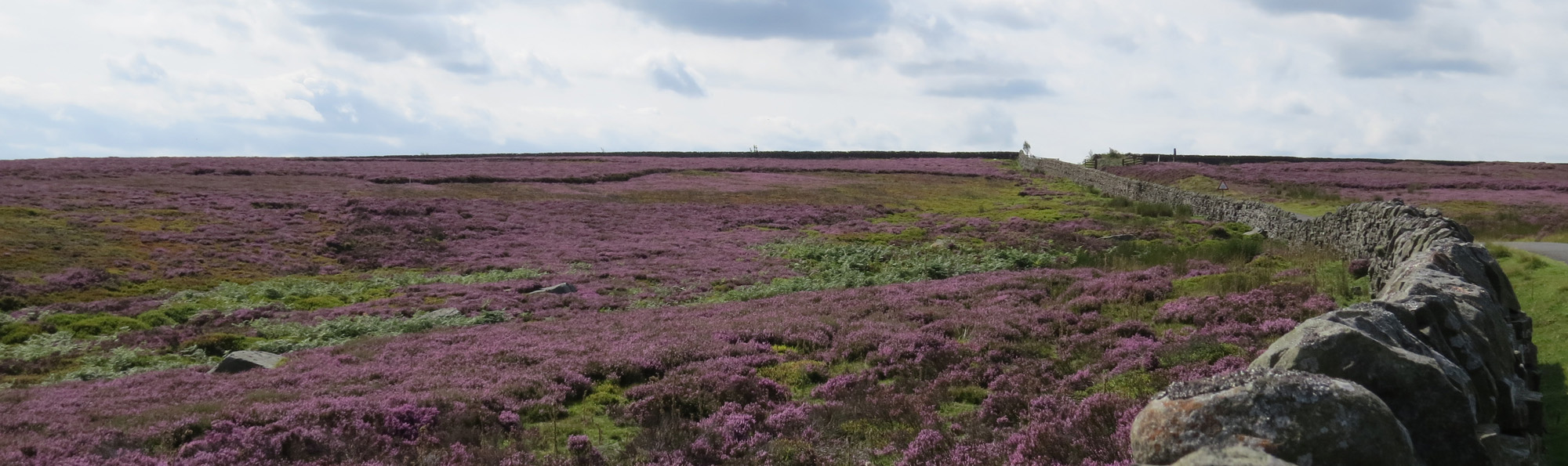


Moorland
Nidderdale AONB has some of the finest heather moorlands in the country.
They are internationally important for conservation because of their rich concentration of rare plants and wildlife.
Moorland habitats
- Upland heath is more commonly called heather moorland and occurs above the upper edge of enclosed agricultural land and below 600 metres
- Drier upland heath is characterised by heather, bilberry and acidic grasses
- Wet upland heath is typically cross-leaved heath with heath rush, deer grass and sedges
- Upland flushes and pools are very wet areas dominated by sphagnum moss, sundews and sedges
- Blanket bog, covering the fell tops, is underlain by a deep layer of peat the bogs are rich in sphagnum moss with cotton grass and heather – characteristic plants such as sundews, butterwort, bog asphodel and cranberry can also be found
- Gill woodlands: bracken, scrub and oak trees grow in the sheltered gills providing biologically rich habitats
- Moorland edge is the transition habitat between agricultural land and heather, and provides a very diverse range of habitats
What are we doing to help conserve the AONB’s moorlands?
- working with owners to help them access Countryside Stewardship grants
- a partner in the Yorkshire Peat Partnership
- promoting best practice for moorland management through training events for landowners
What can you do to protect the AONB’s moorlands?
- follow the Countryside Code
- keep dogs under control
- prevent uncontrolled moorland fires
- protect plants and animals and take your litter home