

Biosecurity
Help protect the environment!
Biosecurity is the term used to describe the measures taken to protect the environment from the spread of Invasive Non Native Species (INNS), and animal and plant diseases.
Visit the GB non-native species secretariat website for more information.
What’s the problem?
The introduction and spread of Invasive Non-Native Species and animal / plant diseases pose a significant threat to the special landscapes and wildlife of Nidderdale National Landscape, either directly (via spread of disease or competition for resources), or indirectly (by causing or exacerbating damage to vital wildlife habitats). They can also impact on our enjoyment of the area, through restricting access or changing the character of landscape features. Species such as Giant Hogweed can even present a hazard to human health.
Their introduction to an area can also have economic and social impacts, for example by increasing flood risk, damage to infrastructure, or costs of control. It is estimated that INNS and animal / plant diseases cost the UK economy approximately £1.7bn a year.
Eradication is often impossible once established. The costs of control are large, therefore stopping the spread by implementing simple biosecurity measures is often the most cost effective way of combatting the problem.
This table shows some of the issues faced in Nidderdale National Landscape:
| Himalayan balsam | Extensive within the Nidderdale National Landscape. |
| Japanese knotweed | Present but not extensive within Nidderdale National Landscape. |
| Zebra mussels | Present at some sites within Nidderdale National Landscape. |
| New Zealand Pigmy Weed / Australia Swamp Stonecrop | Present at some sites within Nidderdale National Landscape. |
| Batchelor’s buttons | Present at some sites within Nidderdale National Landscape. |
| Giant hogweed | Common around the fringes of Nidderdale National Landscape. |
| Signal Crayfish & Crayfish Plague | The gradual spread of Signal Crayfish within our river systems threatens the future of our native white-clawed crayfish within Nidderdale National Landscape and across the UK. |
| Floating pennywort | Currently found on some river systems linked to the Yorkshire Dales but has not yet made it into Nidderdale National Landscape! |
| Tree diseases | Non-native diseases threaten the health of our woodlands with ash and larch currently under particular threat. |
What can you do?
Don’t give pests and diseases an easy ride!
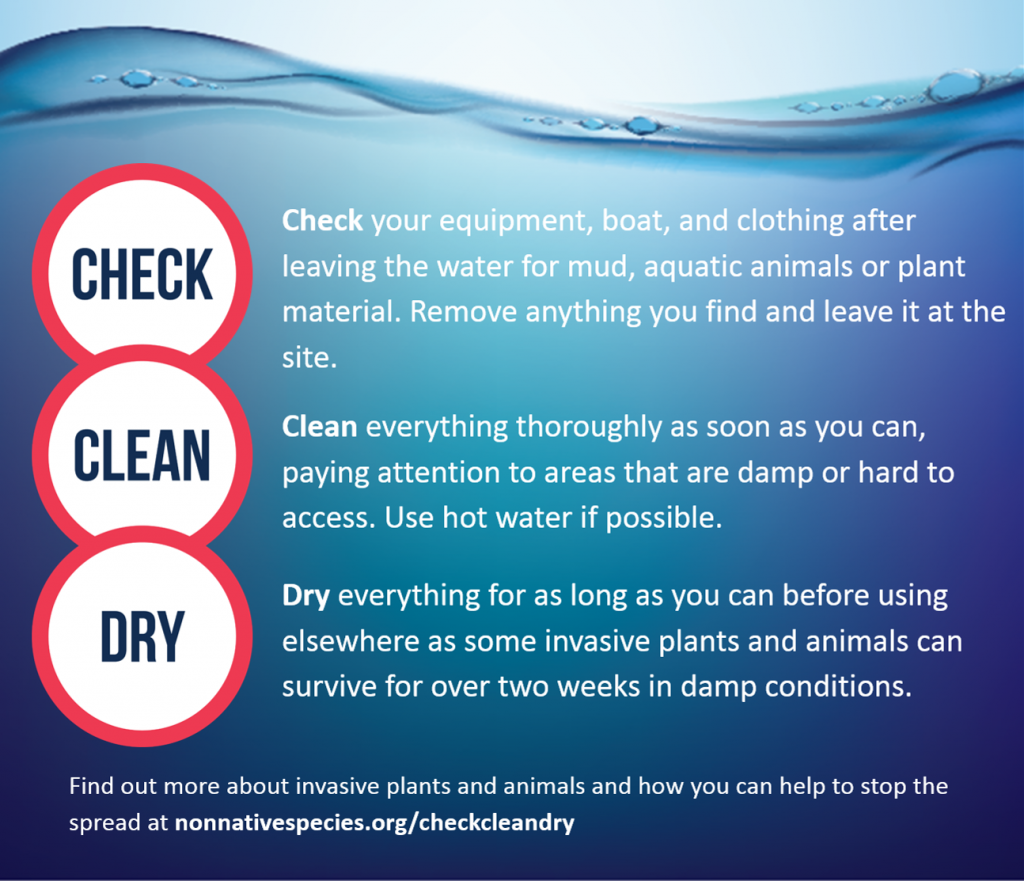
One of the main ways that INNS and animal / plant diseases are spread is by people and our movements and activities, ‘hitch-hiking’ between areas on boots, clothes, equipment, vehicles and boats. You can help to stop the spread of these harmful plants, animals and diseases by following a few simple steps when you’re out and about. Follow the Check-Clean-Dry protocol below at the end of all outdoor activities (before leaving site if possible or when you get home if not). Good biosecurity aims to prevent this movement of INNS by making sure equipment and clothing are free of pests and diseases before moving from one site to another.
Biosecurity kit
Putting together a simple, portable biosecurity kit can help you implement simple measures every day to help limit the introduction and spread of tree pests and diseases.
These are cheap and easily obtained items to include in your kit:
- bucket (big enough to fit your boot and a few inches of water)
- boot pick
- brush
- disinfectant
- hand sanitiser
- water container (or a large re-used water bottle)
- portable pressure washer (optional, but handy for cleaning bikes or other equipment that won’t fit in a bucket)
Janina Holubecki